They cried, then they apologised and maybe talked about their childhood in a way that helped you make sense of so much. They said it again last night: I know I do this. I hate that I do this. I'm going to change.
And some part of you wants so badly to believe it, because you've seen the other side of them too; the thoughtful, funny, achingly sorry person who talks about their childhood in a way that makes you hurt for them. So, you find yourself asking a question that doesn't have an easy answer: is this the start of something different, or the same pattern, just dressed up as remorse?
The Short Answer
Yes, people with vulnerable narcissistic patterns can change. But the capacity to change is not the same as evidence that change is happening.
Meaningful change usually asks for something particularly difficult from someone whose sense of self is organised around shame: being able to hear that they've caused harm without collapsing into self-hatred, blame or defensiveness. It requires sustained accountability, not only insight; behavioural change, not only remorse; and the willingness to keep doing the work when there's no immediate reassurance, forgiveness, or guarantee that the relationship will survive.
Some people can do this work. Some do not. And no amount of love from a partner can do it on their behalf.
A note on the term: “Vulnerable narcissism” describes a pattern of traits and relational defences; it isn't a diagnosis on its own. Not everyone who shows these patterns has narcissistic personality disorder, and no article can diagnose a partner. The more useful question is often not just what is this called, but what is this pattern doing to me, and is anything actually changing?
Insight Is Not the Same as Change
A person can say, with complete sincerity: I know I push people away. I know I get defensive. I know my childhood affected me. And still, none of that tells you what happens the next time they feel criticised.
That's where change is measured. Not in what someone understands when they're calm, but in what they're able to do differently when the old wound gets touched. Without that, insight can become just another layer of narrative, a very articulate explanation of why they behaved a certain way that never quite turns into a change in the behaviour itself or into space for how it affected you.
Reflection: Think about the last time they explained their behaviour to you. Did the explanation come with a change in what they did next time — or did it mostly replace the conversation about your experience?
Why Vulnerable Narcissism Can Look More Changeable Than It Is
Vulnerable narcissism often doesn't look obviously arrogant. It looks ashamed, self-critical, easily hurt, deeply affected by the thought of losing you, which is exactly what makes it so disorienting. As I wrote in Loving Someone with Vulnerable Narcissism, the suffering underneath this pattern is often very real.
But someone can suffer profoundly and still not take responsibility for the effect they have on you. Their pain being real doesn't mean it's the only thing in the room that deserves attention.
Shame Is One of the Biggest Barriers to Change
For someone with vulnerable narcissistic traits, criticism rarely registers as I did something hurtful. It tends to register as I am worthless. That's what produces the familiar defensive moves: denial, minimising, counterattacking, collapsing into the victim role, withdrawing or demanding reassurance.
Real accountability asks someone to sit with an uncomfortable difference between I did something harmful and I am irredeemably bad. When every mistake becomes a full identity collapse, the conversation stops being about the person who was actually hurt and shifts instead to reassuring, soothing or managing the feelings of the person who caused the harm.
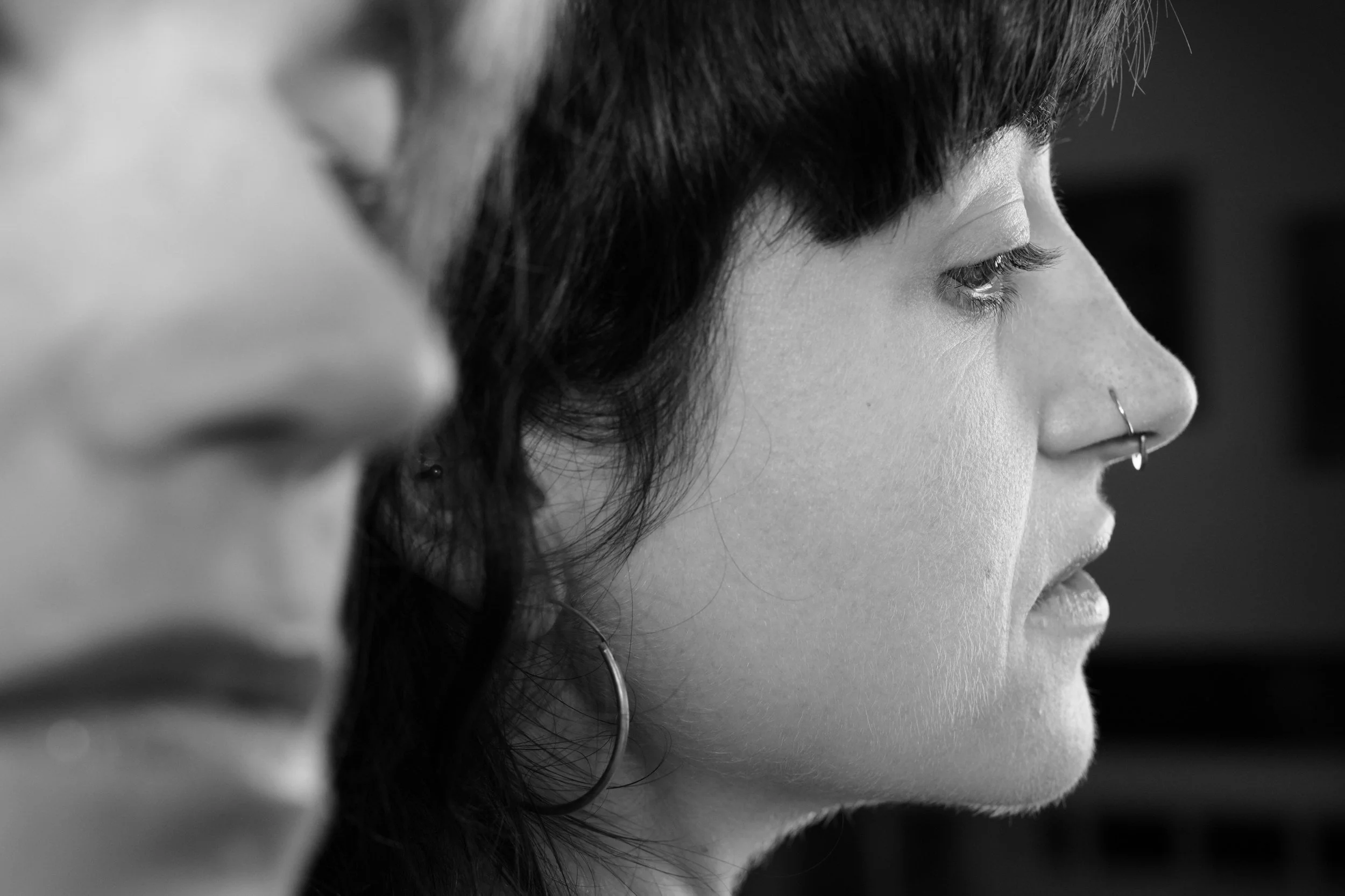
When shame takes over, the person who was hurt can end up comforting the person who caused the harm.
Accountability Versus Self-Pity
This is often the hardest distinction to see from inside the relationship, because self-pity can sound a lot like remorse.
"I'm a terrible person." "Everyone leaves me." "You deserve better than me." These land as emotionally intense, but notice what they ask of you. They usually pull you into reassuring them, which means the person who was hurt ends up comforting the person who did the hurting.
Self-pity says: "I am awful. I ruin everything." Accountability says: "I hurt you. I understand what I did, and I want to hear how it affected you and I'm going to work on changing the behaviour."
Reflection: The last time they were remorseful, did the conversation end with you reassuring them or with them asking what the impact on you was?
What gets in the way is not usually a lack of understanding. It is the inability to tolerate what change requires: being wrong without collapsing, hearing another person's pain without making it about your own and staying with discomfort when there is no immediate reassurance or reward.
What Meaningful Change Actually Looks Like
Real change tends to look smaller and steadier than a breakthrough conversation or a promise made in the aftermath of a rupture.
It looks like being able to hear criticism without immediately retaliating; still feeling hurt, perhaps, but not punishing you for raising something. It looks like getting curious about impact rather than intent: asking what it was like for you rather than explaining what they meant. Apologies become specific rather than general. It’s not I'm sorry you feel that way, but I went quiet for three days after you disagreed with me, and I understand that felt punishing. Behaviour changes when no one is watching, not only during a crisis or when the relationship feels at risk.
And perhaps most tellingly: change survives disappointment. It continues even when you're still angry, when forgiveness isn't immediate, when therapy is uncomfortable, when the relationship isn't guaranteed to be saved. Change that only shows up when it's being rewarded isn't change yet. It's still a strategy.
Real Change Does Not Mean Never Doing It Again
Genuine change doesn't mean a person never becomes defensive, ashamed, or withdrawn again. Deep relational patterns rarely disappear cleanly.
The difference is what happens next. Do they recognise the pattern themselves or only after hours of argument? Can they come back and take responsibility without being chased? Do they repair the harm rather than simply explain it? Are the episodes becoming less frequent, less intense, shorter? Do they increasingly catch themselves before the behaviour fully unfolds?
A setback within genuine change looks different from the same cycle repeating unchanged. The behaviour may still appear sometimes, but the person's relationship to it begins to shift. Perfection isn't the test. Direction is.
Why Therapy Doesn't Automatically Mean Change
Starting therapy is often treated as proof: they're getting help, so I should wait. But therapy only produces change when someone is willing to stay with being challenged, look honestly at their own contribution, and bring the actual relationship into the room, not just their side of it.
Attendance is not evidence of change. Some people use therapy to become more reflective. Others use it to become more articulate about why they behave the way they do, which isn't the same thing.
The Cycle of Crisis, Remorse, and Return
Partners often read crisis behaviour as proof that something has shifted. The pattern is usually: rupture, fear of losing the relationship, intense remorse, promises, a period of closeness. Then, once the fear passes, the old pattern slowly returns.
This is part of why the period right after a rupture is often the worst time to judge whether change is real. Fear of loss can produce real, temporary motivation. What matters more is what happens once that fear has faded.
If the back-and-forth of this cycle feels less like disappointment and more like something you can't seem to walk away from even when you know you should, it may be worth reading about trauma bonding alongside this.
Can Loving Them Help Them Change?
Love can support change, but it cannot create willingness.
A safe relationship may make it easier for someone to recognise old defences, tolerate vulnerability and experiment with relating differently. Being understood may reduce shame, but understanding cannot substitute for accountability. You cannot love someone into becoming able to hear your pain. You cannot regulate carefully enough to prevent every defensive reaction. And you cannot do the difficult internal work on another person's behalf.
Their wounds may explain why change is hard. They do not make you responsible for making it possible.
A note on safety: if the relationship involves intimidation, coercive control, threats, stalking, physical violence, sexual pressure or fear of what might happen if you disagree or try to leave, the question is no longer simply whether the person can change. Your safety matters independently of their potential for growth. In those situations, specialist support and safety planning may matter more than assessing whether their remorse is genuine.
Should You Stay While They Change?
This isn't something anyone else can answer for you. But a few questions tend to cut through the noise when you ask yourself honestly: Is there evidence of sustained behavioural change or mostly intention and remorse? Can you raise a concern without being punished for it, even subtly? Are apologies followed by different actions the next time the same situation arises? Are you becoming more yourself in this relationship over time - freer, more honest, more grounded, or less?
And perhaps most importantly: is this relationship organised around their potential, or their current behaviour? Those are two different relationships, and only one of them is the one you're actually living in. How long have you already been waiting for the second one to become the first?
You don't have to resolve whether someone is capable of change in order to decide whether the relationship, as it exists right now, is sustainable for you. Their potential is not the same thing as your reality.
Signs You May Be Waiting for Change Rather Than Seeing It
Some patterns are worth naming directly, because they can be genuinely hard to see from inside them.
If the same apology keeps following the same behaviour, if change only appears after you threaten to leave, if insight is high but behaviour hasn't moved, that gap between understanding and action is important information. If therapy gets discussed more than it gets lived, or if you're expected to reward small improvements as though they're significant shifts, that tells you something about where the actual work is being done.
Notice whether your limits are being received as reasonable or treated as rejection, cruelty or punishment. Notice whether you're still walking on eggshells, still editing what you say, still managing the atmosphere, still bracing before you raise something. And notice, honestly, whether you've been gradually lowering the bar for what counts as progress. Not because you're naive, but because lowering the bar is one of the ways we protect ourselves from a conclusion we're not yet ready to reach.
So, Can They Change?
Some people with vulnerable narcissistic patterns can change. But it asks for something genuinely difficult: facing shame without escaping into blame, accepting the reality of your pain without making it about theirs, and behaving differently long after the crisis that motivated the change has passed.
The question isn't only whether change is theoretically possible. It's whether it's actually happening. And while you wait to find out, your life still matters, right now, not only on the other side of their growth.
Frequently Asked Questions
Can someone with narcissistic traitsgenuinely love someone?
Yes, and this is one of the most important things to understand, because it resolves a confusion that keeps many people stuck. The capacity for love and the capacity for accountability are not the same thing, and one doesn't guarantee the other. Someone can love you genuinely and still be unable, without sustained therapeutic work, to hear your pain without making it about their own. The love being real doesn't make the dynamic safe. Both things can be true simultaneously, and holding that complexity, rather than resolving it in either direction, is often where the clearest thinking begins.
Can these traits be treated?
It can, particularly through sustained psychotherapy that focuses specifically on personality patterns, shame, relational dynamics and emotional regulation. But treatment depends significantly on the person's willingness to stay with discomfort rather than escape it, to remain in the room when the work gets hard, rather than using insight as a substitute for change. Therapy that produces articulate self-understanding without producing behavioural accountability is not sufficient on its own. The question worth tracking is not whether they're attending therapy, but whether the therapy is showing up in how they relate to you.
Does someone with these traits know what they're doing?
It varies, and the answer is often different depending on whether you're asking about calm moments or activated ones. In a reflective state, many people with vulnerable narcissistic patterns have genuine insight into their own behaviour; they can name it, describe it, trace its origins. What tends to be absent is that same awareness in the moment the behaviour is actually happening. The old wound gets touched, the defensive response activates, and the insight that was available an hour ago becomes temporarily inaccessible. This is why insight, on its own, is not sufficient evidence of change.
Can someone change after losing a relationship?
Loss can be a genuine catalyst; the experience of the relationship ending can make the cost of the pattern real in a way that earlier feedback didn't. But motivation that appears immediately after a rupture needs to be tested over time rather than taken as proof on its own. The period right after a significant loss tends to produce real but temporary motivation. What matters more is whether the work continues once the acute pain has faded, when there's no immediate threat driving the effort and no guaranteed reward waiting on the other side of it.
How can I tell whether the change is real?
The most reliable indicators tend to be the quieter ones. Consistency without an audience, behaviour that holds when no one is watching and no reward is immediately available. Apologies that turn into specific changed action the next time the same situation arises, rather than apologies that replace the conversation about impact. And change that survives your continued anger or hurt, that doesn't require your forgiveness or reassurance to keep going. Change that needs to be rewarded to sustain itself is still, in an important sense, a strategy rather than a shift.
Should I wait for someone with these traits to change?
That's genuinely not something anyone else can answer for you, and you should be cautious of anyone who claims otherwise. What tends to help is separating two distinct questions that often get collapsed into one: whether this person is capable of change, and whether your life as it currently is, not as it might be on the other side of their growth, is sustainable. Those are different questions, and the second one deserves as much attention as the first. You are allowed to make decisions based on your current reality rather than their potential.
Need Support?
Trying to work out whether what you're seeing is real change or a repeating cycle is exhausting to do alone, and you don't have to.
→ Learn more about emotional abuse and relationship counselling
→ See how therapy works
📧 kat@safespacecounsellingservices.com.au
📞 0452 285 526
Related Reading
Have They Really Changed or Is This Just Another Promise? (Has my abusive partner really changed?)
Kat O'Mara, MACA (Level 3)
Compassionate therapy online and in person in Melbourne, specialising in relationship difficulties, domestic abuse recovery, and childhood trauma.