Freeze Response or Why You Can't Just Start

You know exactly what you need to do. The task is sitting there, waiting. Maybe it's an email, a project, a phone call. You tell yourself you'll do it in five minutes.

That was three days ago.

The anxiety about not doing it is now worse than the task itself would be. You feel the weight of it pressing on you constantly. It lives in the back of your mind, creating a low-level hum that follows you everywhere. You think about it when you're trying to sleep. You feel guilty when you're trying to relax. You know it would take ten minutes to just do it, and yet you can't seem to make yourself start.

And then comes the shame: What's wrong with me? Why am I so lazy? Why can't I just do this one simple thing?

Here's what you need to know: you're not lazy. Your procrastination isn't a character flaw or a lack of discipline. It's not evidence that you're irresponsible or unmotivated.

What looks like procrastination is often your nervous system going into freeze. And if this pattern has been with you since childhood, it's very likely connected to how your nervous system learned to protect you when you were young.

If you've read about why you can't just calm down when you're anxious, you already know your nervous system has responses beyond your conscious control. Freeze is fight-or-flight's quieter cousin, the shutdown that happens when neither fighting nor fleeing are options. And it shows up most insidiously not in moments of obvious danger, but in the everyday tasks we “should” be able to just start.

Procrastination Isn't Laziness, It's a Nervous System Response

Let's start by dismantling the most damaging myth about procrastination: that it's simply a matter of willpower or discipline. If procrastination were just about not trying hard enough, then the solution would be straightforward: try harder. Set better goals. Use a better planner. Create more accountability.

But if you've struggled with chronic procrastination, you already know that none of those things work for long. You can have the best intentions, the clearest goals, and the most organised system, and still find yourself frozen, unable to start.

That's because procrastination isn't happening in the thinking, planning parts of your brain. It's happening in your nervous system, in the parts of you that are trying to keep you safe from perceived threat.

What Freeze Actually Looks Like

When we think of freeze responses, we often picture someone literally frozen in fear, unable to move during a traumatic event. And that does happen. But freeze shows up in much subtler ways in everyday life. It can look like:

  • Scrolling social media for hours instead of starting the thing you know you need to do

  • Feeling suddenly exhausted or foggy-headed when you think about the task

  • Finding a dozen other “urgent” things that suddenly need your attention

  • Cleaning your entire house to avoid opening your laptop

  • Feeling physically heavy, like you're moving through mud

  • Mind going blank when you try to figure out where to start

  • Perfectionist paralysis: if you can't do it perfectly, you can't start at all

None of these look like classic freeze, where you're visibly immobilised by fear. But internally, that's exactly what's happening. Your nervous system has assessed the task as a threat and responded by shutting down your capacity to move forward.

You're not choosing to procrastinate. Your body is protecting you from what it perceives as danger.

If these patterns feel familiar, your nervous system might be operating on high alert even when you're not consciously aware of it. When your threat detection system is constantly scanning for danger, even neutral tasks can register as threats worth avoiding.

The Illusion of Productivity

Here's one of the most confusing parts of freeze-based procrastination: you're not actually idle. You're busy. You're doing things. You might be working on other projects, helping other people, organising, planning, researching. You look productive from the outside. But the specific task that matters, the one that's creating all the anxiety, remains untouched.

This is different from laziness. Lazy people rest. Frozen people stay busy with safe tasks to avoid the threatening one. The nervous system has decided that certain tasks are dangerous, and it will do anything, including keeping you exhaustingly busy with “safer” activities, to protect you from that perceived danger.

Why Your Nervous System Sees Tasks as Threats

So what makes a task feel threatening to your nervous system? Why does sending an email or starting a project trigger the same survival response as an actual physical threat?

The answer usually lies in what the task represents to your nervous system, not what it actually is.

When Tasks Carry Emotional Weight

Certain tasks become loaded with meanings that have nothing to do with the task itself:

Performance and judgment: If the task will be seen or evaluated by others, your nervous system might associate it with the threat of criticism, rejection, or not being good enough.

Visibility: Tasks that make you visible can feel threatening if you learned early on that being seen meant being criticised, controlled, or hurt.

Failure: If failure was met with harsh consequences in your childhood, your nervous system learned that getting things wrong equals danger. Freeze becomes a way to avoid the possibility of failure entirely.

Success: Sometimes even success feels threatening. If you grew up in an environment where your achievements were minimised, used against you, or made others jealous or angry, success itself can become something your nervous system wants to avoid.

Vulnerability: Tasks that require asking for help, admitting you don't know something, or showing that you're struggling can trigger freeze if vulnerability wasn't safe in your early life.

Autonomy: Sometimes procrastination is a freeze response to feeling controlled. Even if you want to do the thing, if it feels like someone else is making you do it, your nervous system might resist through freeze.

The task itself might be completely safe. But if it triggers associations with earlier experiences of harm, criticism, or overwhelm, your nervous system will respond as though it's a genuine threat.

The Childhood Connection, How Freeze Gets Wired In

For many people, chronic procrastination patterns trace back to childhood environments where taking action genuinely was risky.

When Freeze Was Your Safest Option

For survivors of childhood abuse, neglect, or relational trauma, freeze often became the safest response when fight or flight would have made things worse. If expressing anger meant punishment, if running away wasn't possible, if your needs were consistently met with dismissal or harm, your nervous system learned to shut down instead.

That protective freeze now activates in situations that only resemble the original threat—tasks requiring visibility, vulnerability, or the risk of judgment. Understanding where these patterns come from is often the first step in recognising why certain tasks feel impossible when logically they shouldn't.

When Trying Meant Criticism

If you grew up with parents or caregivers who were highly critical, perfectionistic, or impossible to please, your nervous system might have learned that trying leads to pain.

Perhaps everything you did was scrutinised. Your homework wasn't just checked; it was critiqued. Your attempts were met with corrections rather than encouragement. Nothing was ever quite good enough.

Over time, your nervous system developed a strategy: if I don't start, I can't fail. If I don't try, I can't be criticised. Freeze became protective.

And now, decades later, even when the critical parent isn't in the room, your nervous system still responds to tasks as though they are. The freeze happens automatically, before you even consciously register why you can't start.

When Visibility Meant Danger

Some children grow up in environments where being noticed was dangerous. Perhaps a parent was volatile, and drawing attention meant becoming a target. Perhaps there was abuse, and being invisible was the safest strategy. Perhaps a sibling was treated harshly, and you learned to stay small to avoid the same fate.

In those environments, accomplishment, visibility, and success all register as threats. Your nervous system learned: stay quiet, stay small, don't stand out.

Now, as an adult, when a task would make you visible, when success would draw attention to you, your nervous system freezes to keep you safe. Even though the original danger is gone, the protective pattern remains.

When Expectations Were Overwhelming

If your childhood was full of impossible expectations, where you were given responsibilities beyond your developmental capacity or where the standards kept shifting and nothing you did was good enough, your nervous system might have learned that tasks equal overwhelm.

You were set up to fail, again and again. And freeze became the only way to protect yourself from the shame and pain of that repeated failure.

Now, when you face tasks, particularly ones with unclear parameters or high stakes, your nervous system remembers that overwhelm. It shuts down to protect you from repeating that experience.

When Autonomy Was Punished

For some people, procrastination develops in environments where having your own preferences, making your own choices, or asserting independence was met with punishment, guilt, or withdrawal of love.

In these contexts, freeze becomes a subtle form of resistance. Your nervous system learned that direct “no” wasn't safe, so it learned to say “no” through inaction instead.

This pattern often overlaps with people-pleasing, saying yes when you mean no, prioritising others' needs over your own. Procrastination becomes the only way to reclaim agency without directly refusing.

Even now, when you genuinely want to do something, if any part of it feels like external pressure or obligation, your nervous system might freeze as a way of preserving some sense of control.

When trying meant danger, your nervous system learned that not starting was the safest option.

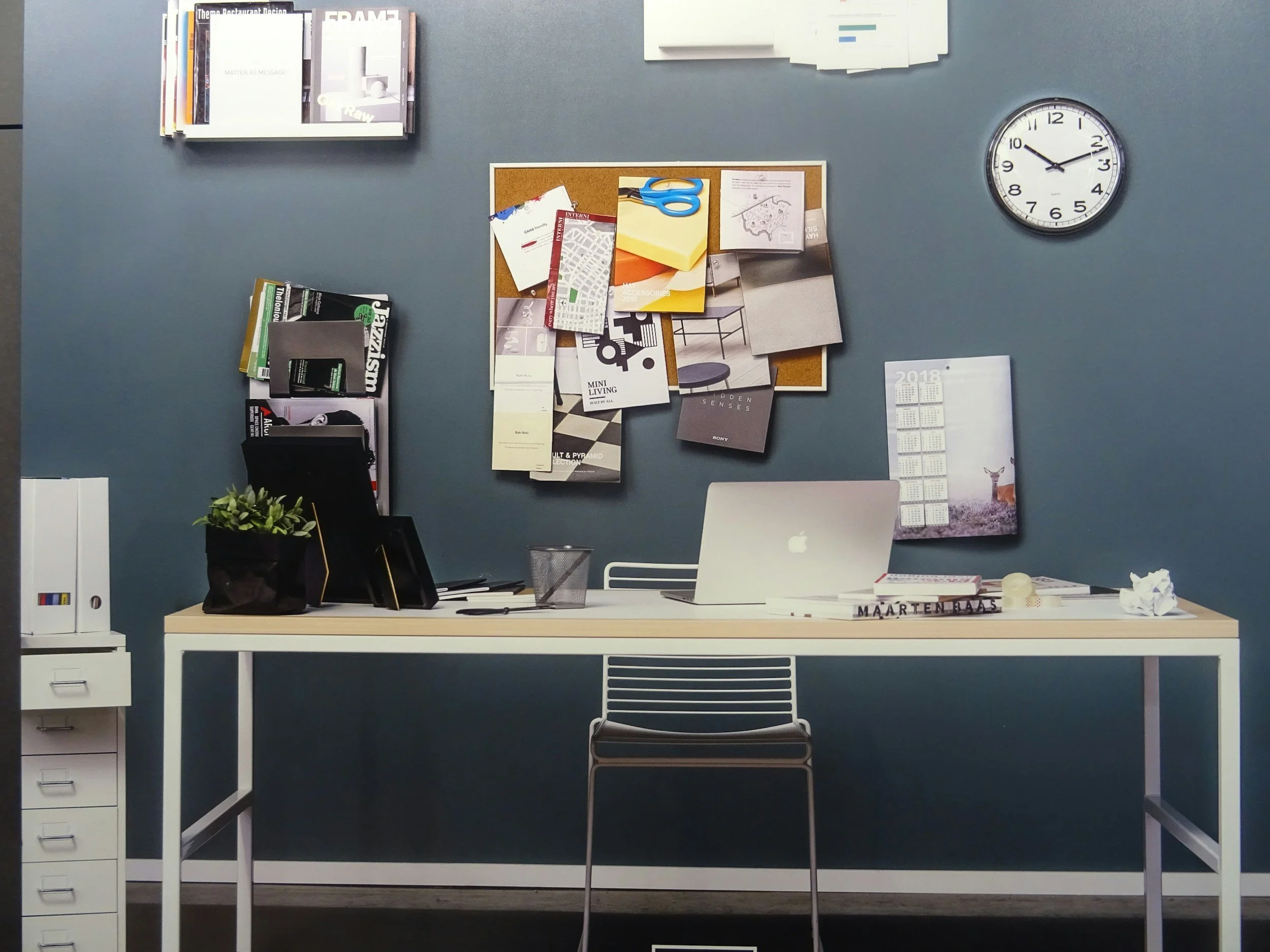
A messy desk and a pinboard with too many notes attached to it.

Stuck but not broken.

Why "Just Do It" Doesn't Work

If you've struggled with procrastination, you've probably received plenty of advice: break it into smaller steps, use a timer, create accountability, just start with five minutes, reward yourself, eliminate distractions.

And maybe some of those things have helped, temporarily. But if your procrastination is a freeze response, none of those strategies address the actual problem.

You Can't Willpower Your Way Out of a Nervous System State

When your nervous system is in freeze, you're not operating from the parts of your brain that can plan, organise, or motivate. You're in a survival state where the body has prioritised protection over action.

Telling yourself to “just do it” in that state is like telling someone having a panic attack to “just calm down”. It doesn't work because the directive is aimed at the wrong system. You can't think your way out of a nervous system state. When you're in freeze, your prefrontal cortex, the part that plans, reasons, and sets goals, isn't running the show. Trying to logic yourself into action is like trying to reason your way out of panic.

You don't need more discipline. You need your nervous system to feel safe enough to come out of freeze.

The Shame Spiral Makes It Worse

Here's what typically happens:

  1. You can't start the task (freeze response)

  2. You judge yourself harshly for not starting (shame)

  3. The shame increases your nervous system activation (more threat)

  4. The freeze deepens to protect you from the shame (more stuck)

  5. You judge yourself even more harshly (more shame)

  6. And the cycle continues

The shame about procrastinating actually reinforces the procrastination. Your nervous system interprets the shame as evidence that you were right to freeze, that the task really is dangerous, because look how bad you feel about it.

This is why self-criticism doesn't motivate you out of freeze. It drives you deeper into it.

When Pressure Creates More Freeze

Another common pattern: as the deadline approaches, other people start putting pressure on you. Maybe it's a partner asking when you'll get it done, a boss following up, or a friend checking in.

That external pressure, even when it's well-meaning, often makes the freeze worse. Your nervous system now has to contend with the original threat (the task itself) plus the additional threat (disappointing others, being seen as unreliable). The more pressure, the deeper the freeze.

And from the outside, it looks like you don't care or aren't trying. But inside, you're drowning in overwhelm, desperately wanting to move but unable to access the capacity to do so.

The Perfectionism Connection

For many people, procrastination and perfectionism are deeply intertwined. And both are often rooted in the same nervous system patterns.

Perfectionism as Freeze

Perfectionism isn't really about wanting things to be perfect. It's about trying to avoid the pain of criticism, rejection, or shame.

If you learned that mistakes were met with harshness, that “good enough” wasn't acceptable, or that your worth was tied to your performance, perfectionism becomes a survival strategy: If I do it perfectly, I'll be safe.

But here's the trap: perfectionism makes starting nearly impossible. If the standard is perfection, and you know you can't achieve perfection (because no one can), freeze is the logical response. Your nervous system calculates: if I can't do it perfectly, and imperfection means danger, then the safest option is to not start at all.

All-or-Nothing Thinking

Perfectionism often comes with all-or-nothing thinking: either I do this completely and flawlessly, or I don't do it at all.

This binary thinking is a hallmark of a dysregulated nervous system. When you're inside your window of tolerance, you can hold nuance, flexibility, grey areas. But when you're outside that window, everything becomes black and white.

The task becomes all-consuming in your mind. It has to be done a certain way, at a certain time, under certain conditions. And if those conditions aren't met, you can't start. This rigidity is freeze masquerading as standards.

The Fantasy of the Perfect Moment

Many procrastinators wait for the “right time” to start: when they have enough energy, enough time, the right mood, the perfect plan.

But that perfect moment rarely comes. And waiting for it is another form of freeze, a way your nervous system keeps you from taking action by convincing you that now isn't safe, but later will be.

The truth is, if your nervous system sees the task as a threat, no amount of planning or waiting will make it feel safer. You can't think your way into readiness when you're in a protective freeze state.

What Actually Helps Is Addressing the Nervous System First

If procrastination is a freeze response, then the solution isn't better time management or more willpower. It's helping your nervous system feel safe enough to come out of freeze.

Regulation Before Action

What tends to help is working with nervous system regulation before trying to force action. When your system is in freeze, attempting to push through often deepens the shutdown. Creating some distance from the task while you bring your system back into a state where movement is possible tends to be more effective.

This might look like:

  • Gentle movement: A short walk, stretching, shaking out your body. Movement can signal to your nervous system that you're not actually frozen, that mobility is available.

  • Orienting: Looking around the room slowly. Noticing five things you can see. This can ground you in the present moment and help your nervous system recognise that you're not in the past danger.

  • Breathing: Not necessarily deep breathing (which can sometimes increase anxiety), but just noticing your breath and perhaps extending your exhale slightly. This can activate the parasympathetic nervous system, which helps counter freeze.

  • Co-regulation: Being near someone who feels calm and safe. Even if you don't talk about the task, their regulated presence can help bring your system into greater balance.

  • Self-compassion: Talking to yourself the way you'd talk to a frightened child. “I know this feels hard. I'm here with you. We don't have to do it all at once.”

The goal isn't to force yourself into action. It's to create enough safety that action becomes possible.

Starting Smaller Than Small

When your nervous system has more capacity to settle, smaller steps toward the task often become possible. The size of the step matters less than whether your nervous system can tolerate it.

Not “write the first paragraph” but “open the document”. Not “make the phone call” but “find the phone number”. Not “start the project” but “spend two minutes thinking about it”.

If even opening the document feels threatening, make it smaller: “look at the file name.” Then stop.

The goal is to prove to your nervous system that approaching the task doesn't equal danger. Every tiny step that doesn't result in harm helps rewire that association.

Separating the Task from Its Meaning

Sometimes it helps to explicitly name what your nervous system is afraid of.

“I'm not actually afraid of sending this email. I'm afraid of being judged.”

“I'm not afraid of the project. I'm afraid of failing and proving I'm not good enough.”

“I'm not afraid of the task itself. I'm afraid of being visible.”

When you can separate the actual task from the emotional weight it's carrying, sometimes the task itself becomes more manageable. You might not be able to eliminate the fear of judgment or failure immediately, but you can acknowledge it, hold it gently, and decide whether the task itself is actually dangerous.

Often, naming the underlying fear reduces its power. Your nervous system relaxes slightly when it realises you see the threat, that you're not dismissing or minimising it.

Building in Safety Cues

If certain tasks consistently trigger freeze, it can help to build safety cues into the process. This might mean:

  • Working near someone who feels safe and supportive

  • Using a body double (someone working quietly alongside you)

  • Setting a timer so your nervous system knows there's a limit

  • Creating a ritual before you start (tea, music, lighting a candle) that signals “this is a safe space”

  • Giving yourself permission to stop without judgment if freeze comes up

These aren't distractions or procrastination techniques. They're ways of communicating to your nervous system: we're not in danger here. This is different from before.

Addressing the Shame

One of the most important parts of working with freeze-based procrastination is addressing the shame that surrounds it.

The shame keeps you stuck. It reinforces your nervous system's belief that you're not safe, that you're fundamentally flawed, that the task really is dangerous because look how much pain it causes you.

The shame makes sense, given how procrastination is usually talked about in our culture. You've likely been told, directly or indirectly, that procrastination is a character flaw, a sign of laziness or lack of discipline. So of course you feel ashamed when you can't “just do it”.

But shame needs to be met with compassion, not more criticism. This doesn't mean excusing behaviour that's genuinely causing problems in your life. It means recognising that your procrastination is a protective response, not a character flaw. That your nervous system is doing its best to keep you safe with the information it has.

When you can approach your freeze response with curiosity rather than judgment, when you can ask “what is my nervous system trying to protect me from?” instead of “what's wrong with me?”, the pattern begins to shift.

When Procrastination Becomes a Problem Worth Addressing

Not all procrastination is traumatic freeze. Sometimes you're genuinely tired, legitimately overwhelmed, or reasonably prioritising other things.

But if your procrastination is causing significant distress, if it's affecting your relationships, work, or sense of self-worth, if it's been a pattern since childhood, or if it's accompanied by intense shame and self-criticism, it's worth exploring whether there's a nervous system component.

Signs This Might Be Freeze

  • The gap between what you want to do and what you can do feels excruciating

  • You experience physical sensations of heaviness, fog, or shutdown around certain tasks

  • Your procrastination is selective (you can do some things easily, but others feel impossible)

  • The shame and anxiety about not doing the task is worse than the task itself would be

  • You've tried every productivity system and nothing works for long

  • The pattern traces back to childhood

  • Certain types of tasks (visible, evaluated, autonomous) consistently trigger freeze

  • You can articulate exactly why the task matters and still can't make yourself start

If several of these resonate, your procrastination is likely more about nervous system protection than time management.

The Cost of Unaddressed Freeze

Living with chronic freeze-based procrastination takes a toll. There's the practical impact: missed opportunities, strained relationships, financial consequences, career limitations.

But there's also the internal cost: the constant background anxiety, the shame, the sense that you're failing at being a functional adult, the exhaustion of fighting your own nervous system every day.

Many people spend years believing they're just lazy or undisciplined, trying harder and harder to force themselves into action, never realising that they're dealing with a nervous system pattern that needs a completely different approach.

Understanding that your procrastination is freeze doesn't instantly solve it. But it does change how you relate to it. You can move from self-blame to self-compassion. From trying to force action to creating safety. From fighting your nervous system to working with it.

Living With Freeze-Based Procrastination

The way your system responds to certain tasks makes sense. It learned, often early on, that trying led to criticism, that visibility meant danger, or that failure had harsh consequences. Freeze wasn't random. It was protective.

Some of us will always have nervous systems that are quicker to freeze around certain tasks. If you experienced criticism, unpredictable expectations, or environments where trying felt dangerous, your system may always be a bit more cautious about taking action.

This isn't a failing. It's just your particular wiring, shaped by what you survived.

What you can control:

  • How much compassion you offer yourself when freeze happens

  • What tools and support you build around difficult tasks

  • Whether you work with your nervous system or against it

  • The environments you create (body doubling, timers, safe spaces)

  • Whether you seek help when the pattern is limiting your life

What you can't control:

  • That your system learned this pattern

  • That certain tasks will still trigger freeze sometimes

  • That healing isn't linear

  • That some days will be harder than others

  • That building new patterns takes time

The goal isn't to never procrastinate again or to have a “normal” relationship with productivity. The goal is to understand your freeze response, work with it compassionately, and gradually expand your capacity so tasks that once felt impossible become manageable.

It's Not About Discipline, It's About Safety

If you've recognised yourself in this post, here's what matters: your procrastination isn't evidence that you're lazy, undisciplined, or fundamentally flawed. It's evidence that your nervous system learned to protect you through freeze. And that protection made sense once, even if it's causing problems now.

The way forward isn't through more willpower or better systems. It's through addressing what your nervous system needs to feel safe enough to move.

This might mean working with a therapist who understands nervous system patterns and childhood trauma. It might mean learning regulation skills that help you work with freeze when it arises. It might mean examining the early experiences that taught your system that action equals danger, and slowly providing new experiences that teach a different lesson.

It's not a quick fix. Nervous system patterns that have been in place since childhood don't shift overnight. But they do shift, with time, compassion, and the right support.

You can learn to recognise when you're in freeze. You can develop the capacity to regulate yourself back into a state where action is possible. You can separate the task from the meaning your nervous system has attached to it. You can build new associations where starting something doesn't equal danger.

And gradually, the tasks that used to trigger such intense freeze become more manageable. Not because you've become more disciplined, but because your nervous system has learned that it's safe to move.

Sometimes insight and small safety shifts are enough.

For some people, understanding freeze and practicing regulation skills creates enough shift to change the pattern. For others, particularly when procrastination is tied to specific traumatic memories or pervasive childhood experiences, approaches like EMDR or somatic therapy can help process the original events that taught your nervous system action equals danger. The goal isn't to become more productive. It's to heal what's keeping you stuck.

If You're Considering Support

Recognising freeze patterns is often the beginning of a different relationship with procrastination. What tends to follow is a process of noticing when freeze happens, experimenting with what helps your system settle, and gradually building capacity to approach tasks that once felt impossible.

This isn’t about forcing yourself to be more productive or overriding protective patterns. It’s about understanding where freeze developed and creating conditions where your nervous system has enough safety to move.

Working with someone who understands nervous system patterns can help create space for that kind of shift. Trauma-informed therapy doesn’t focus on productivity tips or time management. It focuses on what your freeze response is protecting you from and how to build enough safety that action becomes possible again.

This is about healing the patterns that keep you stuck, so you can live with more freedom, less shame, and greater capacity to move toward what matters to you.

If you'd like support with this, I'm here.

📧 kat@safespacecounsellingservices.com.au
📞 0452 285 526

FAQs

Is all procrastination a trauma response?

No. Sometimes procrastination is just being tired, overwhelmed, or reasonably choosing to prioritise other things. But if your procrastination is chronic, causes intense shame, and seems disproportionate to the actual task, it's worth exploring whether there's a nervous system freeze component.

How is this different from ADHD?

ADHD and trauma-based freeze can look very similar and often coexist. ADHD involves differences in executive function and attention regulation. Freeze-based procrastination is about the nervous system perceiving threat and shutting down. Many people have both, and working with both requires addressing the nervous system alongside ADHD-specific strategies.

Will understanding this make my procrastination go away?

Understanding alone won't eliminate the pattern, but it's an essential first step. Once you recognise that your procrastination is freeze, you can approach it with compassion rather than criticism and use nervous system regulation strategies rather than just trying harder. The pattern shifts when you address what your nervous system needs to feel safe.

What if I have deadlines and can't wait to regulate my nervous system?

This is the frustrating reality of freeze-based procrastination: you often can't force your way through it, even when there are real consequences. In crisis moments, sometimes external structure (body doubling, accountability, working with someone) can help. Long-term, addressing the underlying nervous system pattern is what creates sustainable change.

How long does it take to change this pattern?

It varies greatly depending on how long the pattern has been in place and what's maintaining it. Some people notice shifts relatively quickly once they understand what's happening. For others, particularly when there's significant childhood trauma, it's a longer process. What matters is working with your nervous system rather than against it.

Should I see a therapist for this?

If procrastination is significantly impacting your life, relationships, or sense of self, and if you recognise freeze patterns that trace back to childhood, therapy can be incredibly helpful. Look for therapists trained in trauma-informed approaches, nervous system regulation, or somatic therapies.

Next
Next

Why Thinking Your Way Out of Trauma Doesn't Work